
What Principals Say They Need Most: New Research from Dr. Jason Grissom
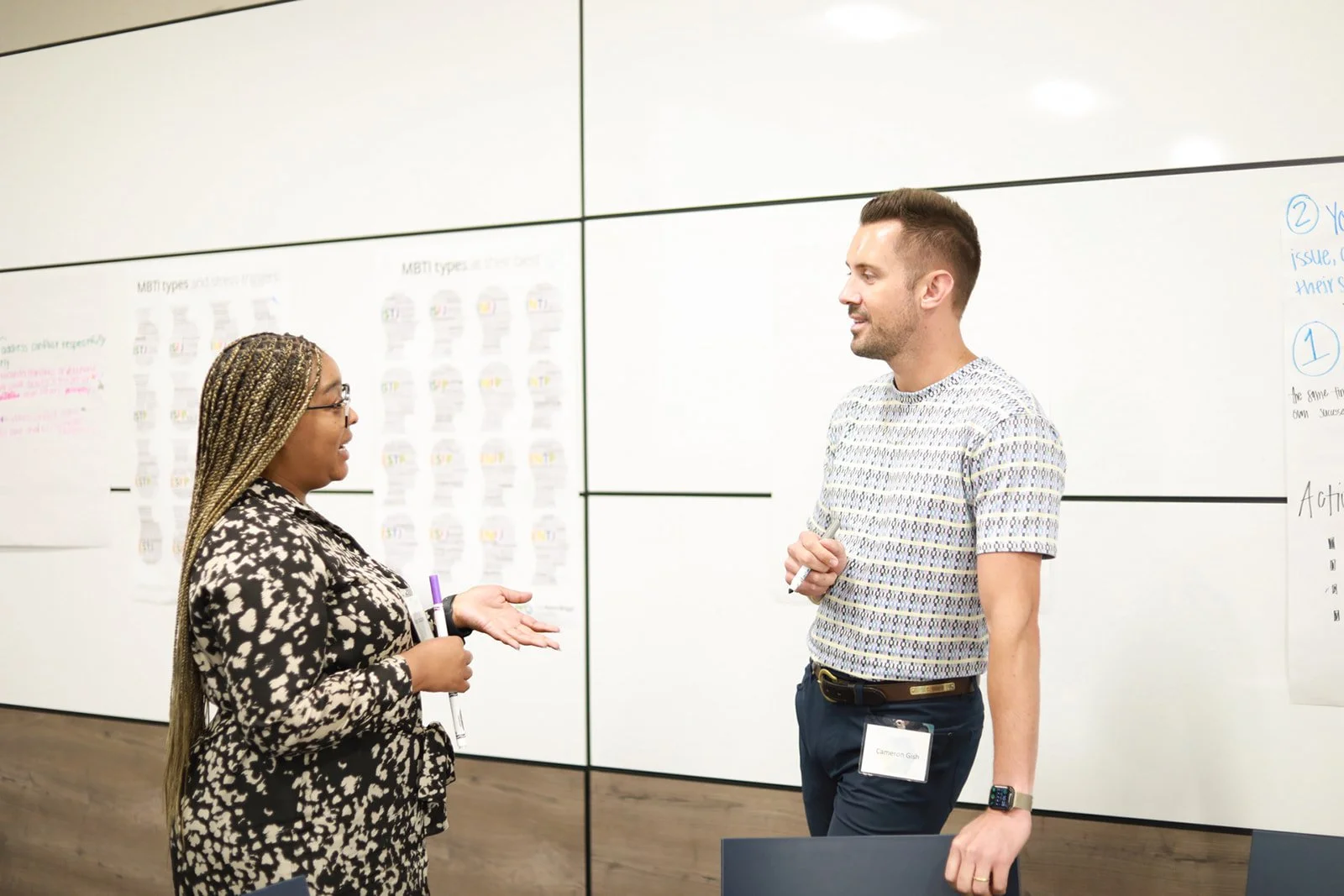
PIVOT principal cohort members engaging in collaborative professional learning
At PIVOT, we believe that strong school leadership is one of the most powerful levers for student success. That’s why we’re thrilled to celebrate the release of Understanding the Landscape of Professional Learning for School Principals, a major new national study led by Dr. Jason Grissom, a Vanderbilt professor and PIVOT board member, alongside Morgaen Donaldson, Jessica Rigby, Michelle Doughty, and Stephanie Forman.
This research is already shaping the national conversation about what principals actually need to grow and what systems must do differently to support them.
As the report opens, “Extensive research shows that a school’s principal shapes the experiences and outcomes of both students and teachers.” Yet principals’ learning opportunities remain fragmented, uneven, and often misaligned with the real demands of the role.
This study has the potential to help the field change that.
Four Things That Stood Out to Us
1. Principals learn constantly but mostly in unstructured ways.
One of the most striking findings: principals overwhelmingly rely on informal learning—text threads, peer calls, podcasts, and “learning by doing”—far more than formal PD. Principals reported engaging in informal learning at least 12 times per year, compared to 2–5 instances of formal training.
This mirrors what we see in our partner districts: leaders are hungry for just‑in‑time, problem‑centered learning that meets the moment.
2. Instructional leadership dominates; everything else lags.
Across states, principals said their learning most often focused on instructional engagement with teachers. As one principal put it, “I feel like the instruction part we’ve got, hands down.”
But learning about school climate, teacher collaboration, strategic management, and equity was far less frequent and often entirely informal. These are the very areas where principals tell us they feel the most isolated and in need of support.
3. Principals value learning that is relevant, social, and immediately useful.
Principals rated informal conversations, networks, and learning‑by‑doing as the most useful modes of learning, even after controlling for frequency. As the authors write, principals found learning most powerful when it was “grounded in something that’s really going on.”
This is a powerful call to rethink how we design leader learning systems.
4. Principals receive shockingly little coaching.
The national data reveal something both surprising and concerning: the average principal receives less than five coaching sessions per year. For a role this complex, and for leaders who are responsible for the instructional growth of an entire school, five touchpoints a year is nowhere near enough.
This gap reinforces what we hear from principals every day: they want more frequent, job‑embedded coaching that helps them navigate real problems of practice, not episodic check‑ins or compliance‑driven evaluation cycles.
Why This Matters for PIVOT’s Work
This research affirms what we see every day in schools: principals thrive when they have access to coherent, relevant, relationship‑rich learning that honors the complexity of their role.
It also underscores the urgency of the work PIVOT is leading:
Job‑embedded coaching and feedback
Leader networks that reduce isolation
Practical tools that support instructional leadership and the other demands of the job
Our design principles align directly with the report’s implications for districts: build coherent systems, differentiate support, lean into both formal and informal learning, and remove barriers like time and access.
Grateful for this Contribution
It’s been a privilege to learn from Dr. Grissom’s leadership and scholarship. His work consistently lifts up the experiences of principals and sharpens the field’s understanding of what effective school leadership requires. This study offers a thoughtful roadmap for states, districts, and organizations working to build stronger systems of support.
You can read the full report here:
Understanding the Landscape of Professional Learning for School Principals (2026)